
Creating a tranquil space in your garden while ensuring privacy has never been easier with the dimensional beauty of garden hedges and screens.
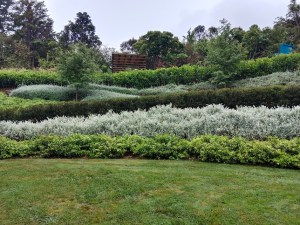
These green barriers not only effectively screen out unsightly areas but also form stunning garden features that draw the eye. Hedges also are great for blocking wind and creating sheltered warmer areas in your garden.
With the right plant selection, you can achieve a stylish and serene outdoor environment. Here’s how to set up the perfect hedges and screens for your garden.
Low hedges are perfect for edging garden beds and defining distinct spaces within your landscape. Consider using Buxus Green Gem, Euonymous’ Emerald Gem’, Corokia, Lonicera or Teucrium, which are not only easy to shape into a formal hedge but also reliable in maintaining their appeal year-round.

Another charming choice is the compact varieties of Camellia that can create an evergreen hedge, putting on a spectacular show with exquisite flowers throughout the seasons. Low hedges can complement your garden layout while adding layers of texture and colour.
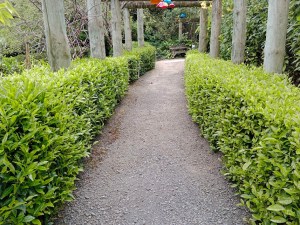
When privacy is essential, taller growing evergreen options like Photinia, Griselinia, Viburmum ‘Dense Fence’, Bay Trees, Callistemon and Pittosporums are excellent choices.
If you prefer an aesthetic that changes with the seasons, deciduous plants like ornamental pear and ornamental plum trees provide visual intrigue while remaining functional. Likewise Hornbeam (Carpinus) makes a dense hedge. However, remember that being deciduous means you will experience reduced privacy in winter months.
]Garden Tip: Evaluate your privacy needs. Will a fast growing formal, tightly knit hedge which requires regular pruning suit your landscape, or would you prefer something less strict that demands less attention, but might be slower growing?
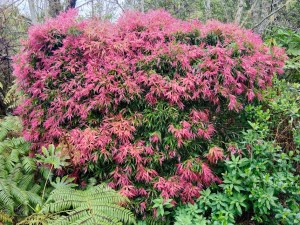
Create a stunning wall of green in your garden with screening trees that possess gorgeous foliage and flowers. Choose varieties like Evergreen Magnolias, known for their lush, glossy leaves, or consider Pohutukawa for an excellent flowering tree option.
In areas where height is needed but width is limited, innovative choices can still yield beautiful results. The naturally compact narrow form of sasanqua camellias such as ‘Early Pearly’ and “Setsugeka’ Camellia make a dark green flowering hedge.  .
.
Want to add an edible element? Look no further than Ball erina Apples—they’re not only attractive but also productive! Berryfruit such as Blueberries can create a thick border.
Plants like Wisteria, Clematis, Boston Ivy, Tecomanthe, and climbing star jasmine can wrap your fence in greenery and vibrancy. Additionally, consider edible climbers like passionfruit or nasturtium for a delightful twist.
Create a hedge or screen with a vision; a hole caused by a dying plant can disrupt your entire scheme. To keep your plants healthy and stunning, prepare the entire area by overhauling the soil with compost and organic matter,and try to ensure the soil is well drained and of an equal depth all the way along the hedge.
Visit Kaipara Coast Plant Centre to pick bagged Planting mix to mix into the soil pre-planting, alongside using fertiliser and lime to promote robust root growth.
Garden Tip: Choosing the right plants according to your garden’s environmental conditions will set you on the path to success!
To authentically stretch your hedging potential, learn the optimal plant spacing. A tighter-knit hedge that you intend to prune regularly will require plants to be placed closer together than normal spacing. A standard rule is to space plants about 1 meter apart if you want a hedge that reaches about 3 meters in height. For hedges aimed to stay around 1 meter high, a spacing of about 30 cm should suffice. On the other hand, informal hedges and screens can be spaced further apart to define the area naturally.Pruning: Curate with Care!
When it comes to pruning your garden gems, the approach of “little and often” tends to yield the best results. Begin trimming them young to promote an integrated, bushy growth habit. For an even appearance, try maintaining a slight angle—this will ensure that the top of your hedge isn’t shading out the bottom, leading to unattractive sparse patches. Generally taking a maximum of 1/3 off is a good plan, and with evergreen trees, try not to cut back into bare trunks below where the leaves finish.
If you prefer a naturalistic feel to informal hedges, give them a lighter touch. Always remember to prune flowering hedges after they bloom to preserve their blooms for the next season.
Creating meaningful hedges and screening plants requires thoughtfulness, patience, and basic understandings of plant care. Whatever your garden aesthetic, you’ll find joy in crafting spaces full of inviting beauty and delightful privacy. Preparing well now means you can enjoy the exquisite explosion of greenery in the seasons ahead!