Planting for the Birds and Bees – David’s Stories.
(This article was first published in the monthly Valley Voice Magazine)
Spring is the season life bursts forth. Dead looking deciduous trees burst into flower and new leaves form. Damper rural paddocks get covered in our version of wild flower meadows – swathes of yellow buttercup flowers intermingled with white and pink clover lighten the fresh green grass.
Hillsides left to re-generate into natives get covered in a mix of white manuka and golden gorse flowers.
You would think that rural areas would be the ideal place to locate bee hives.
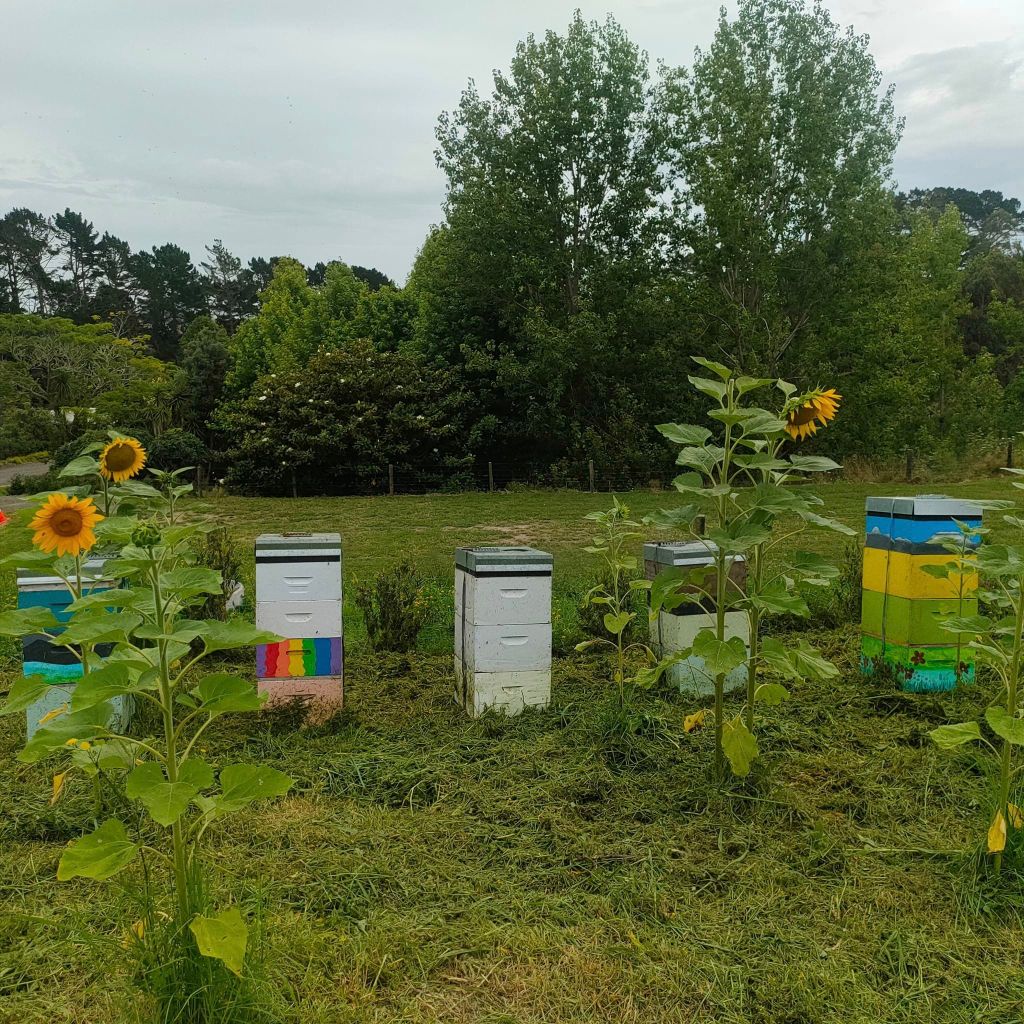
A recent discussion with a local beekeeper highlighted the difficulty of having bee hives in Rural areas. I had always assumed that there was plenty of food for bees, however it turns out that rural areas can be deserts rather than desserts for foraging bees.
A wide diversity of plants is needed for a successful ecosystem, and unfortunately so many of our rural areas are monocultures of kikuyu grass and pine trees, and are not ideal for creating a year round food source for bees and nectar eating birds.
Many of the most popular garden plants either don’t have a lot of flowers, or, their flowers have little or no nectar and pollen in them that birds and bees love. Examples of these popular low food value plants include Lomandra grasses, Camellias & Ficus. Some plants such as Photina would be a great food source, but are almost always kept trimmed as a hedge, and so don’t have a chance to flower.
Trees can be a wonderful food source for bees and birds. Fruit trees, Maples (Acer), Paulownia, Macadamia, Bottlebrush, Eucalyptus, Pohutukawa’s, Cabbage trees, Silky Oak, Kowhai and Kanuka are great options. Lower growing plants such as Flax, Echium, Lavenders, Rosemary, Salvias, Grevilleas, Comfrey and Hebes have lots of flowers that bees love.
Vegetable gardens can also be a great food source, with many herbs and vegetables having flowers for the bees. Leaving plants such as Brassicas and Spring Onions to flower in your vegetable garden is also another way to provide valuable bee food.
Native forests are a great source of year round food for the bees, many native trees have flowers that are ideal for bees, and even scruffy looking revegetation/initial colonizing plants such as Coprosma ‘Karamu’ get covered in flowers that are great for the bees, followed by thousands of berries for the birds.
Including a wide range of plants for attracting bees and birds into your property is a wonderful way of helping improve the diversity and resilience of our local ecosystems, plus it makes our gardens and properties a much more interesting place to live in.
I see multiple Kereru in our garden every day, and I always stop and watch when I see one, thinking back to before we planted our gardens, when we would be lucky if we saw one Keruru a year. Now because of the mix of plants we have planted, we now have all year food sources for them.